All Categories
Featured

New Trends in Savory Home Cookouts to Try
Table of Contents
Know what you're looking for. Even heat distribution is crucial, and it's achieved by adjusting the vents to let oxygen in and out and stacking the coals to produce indirect and direct cooking zones. You also desire a blazing-hot fire. Charcoal does not consist of water, allowing it to reach those white-coal temperatures that produce the best sear on a steak or char on a cob of corn.
Sure, there are numerous types of charcoal grills, from barrel formed to flat-tops. Even a fundamental Weber Original Kettle grill (premier in Customer Reports' "Best Charcoal Grills of 2020") can outperform the others merely based on its classic shape, which is optimal for heat circulation.
If you desire the highest-performing, the majority of heat-efficient charcoal-burning grill on the market and cost isn't a deterrent, consider a Kamado, whose models consist of The Big Green Egg (see opposite page). Select lump charcoal over briquettes.
Top Summer BBQ Secrets for Home Chefs
Forget the lighter fluid. Buy a chimney. This hollow metal cylinder with a bottom grate holds the charcoal. You use paper and matches or an air-driven lighter to help the charcoal ignite and never have food that tastes like lighter fluid. Photo by Aliza Baran Tighten up your poultry video game.
One failsafe technique is to choose for thigh meat, which has more fat and therefore higher juiciness and taste. Purchase bone-in, skin-on breasts and cook them thoroughly over indirect heat.
The way you cook this lean white meat makes a distinction, too. To keep it from losing its precious juices, "I would sear it and move it to the cold side of the grill" to prepare gradually, he states. He also buys entire chickens, cuts them up and has parts he can prepare differently grilled thighs, poached (in liquid on the stove) breasts for ramen.
:strip_icc()/RU2344501-790b5c2c8f7f4ed5a7bc1bc76551fbab.jpg)
First, season your meat with salt and let it come to room temperature level. (You can even season it approximately eight hours before cooking and let it sit in the refrigerator.) Position the steak on the hottest part of the grate and scorch it for 2 to 3 minutes on each side.
How to Cook the Ultimate Griddle Patty
Move the meat to the cooler part of the grill to complete it off to whatever temperature level you like. "I'll put a half-cabbage on the 'cold' side of the grill, get a great char on it, and it softens and becomes something else" something fantastic, he states.
"The crust it forms will also help it different" from the grate without falling apart, he states. Before utilizing it each time, Zerkel scrapes the grate and cleans it down with oil.
Weber Original Kettle 26," $329 at Village Ace Hardware (2170 N. Prospect Ave.) Proponents claim the huge advantage is the taste it imparts to food that enticing smoky taste. But Zerkel, a professional chef who's accustomed to using a stove's knobs and temperature controls with accuracy, enjoys this method of cooking for its unpredictability.
Image by Aliza Baran The Big Green Egg can bake, slow-smoke, saut and sear. If cost is no item, this grill just might be for you. Image thanks to Didriks You may have become aware of this gizmo a green, egg-shaped ceramic grill that can prepare a pizza at 700 degrees in minutes and smoke a beef brisket at 220 degrees for 14 hours.
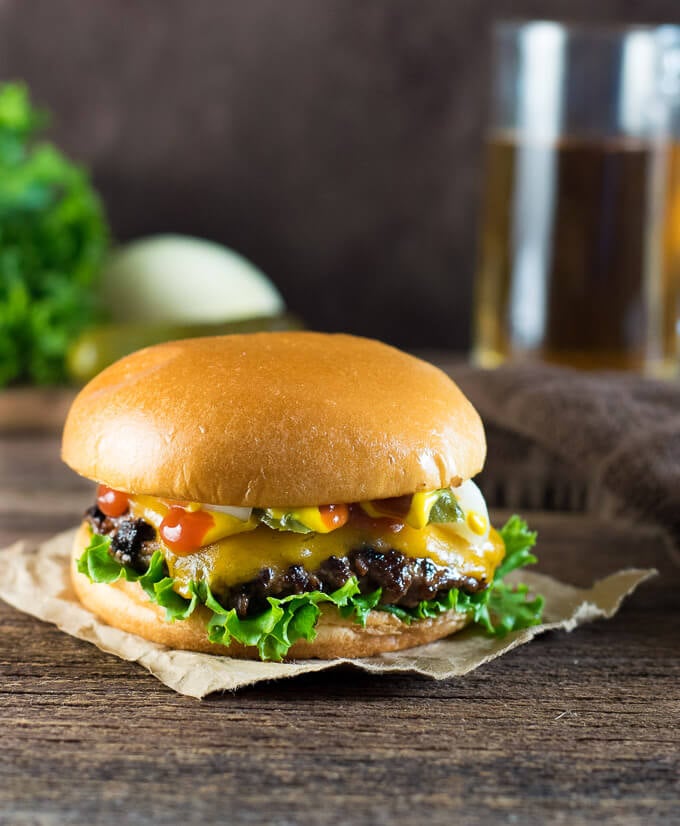
The Big Green Egg is a grilling financial investment that might make sense if you plan to use it a lot. Todd Minkin does. The Fein Brothers co-owner keeps his Egg in regular rotation in summer. What does he like about it? "Since of the density of the ceramic, it holds its temperature level well.
Why Makes the Best Savory Burger in 2026?
The Egg doesn't require much charcoal, and for those who loathe cleansing grills, this one is low-maintenance. To buy: Particularly terrific for steaks, ground meat and pork ribs, bone-in roasts, chops.

Latest Posts

Expert Outdoor Grilling Secrets for the Season
How to Make Perfect Golden Sides
How to Master the Griddle: Essential Burger Methods